ProjectsOrvia

Next.jsReactTypeScriptTailwind CSS
Context
Companies that want a great website usually get one of two things: a template that looks like everyone else's, or an agency where the people who pitch the work hand it off to the people who actually do it, with layers of account management in between. Either way the craft gets lost somewhere between the first call and the final launch.
Orvia is a digital design and development studio in Vancouver. The senior designers and developers who scope a project are the same ones who design and build it, first concept to launch. No templates, no handoffs, no unnecessary layers.
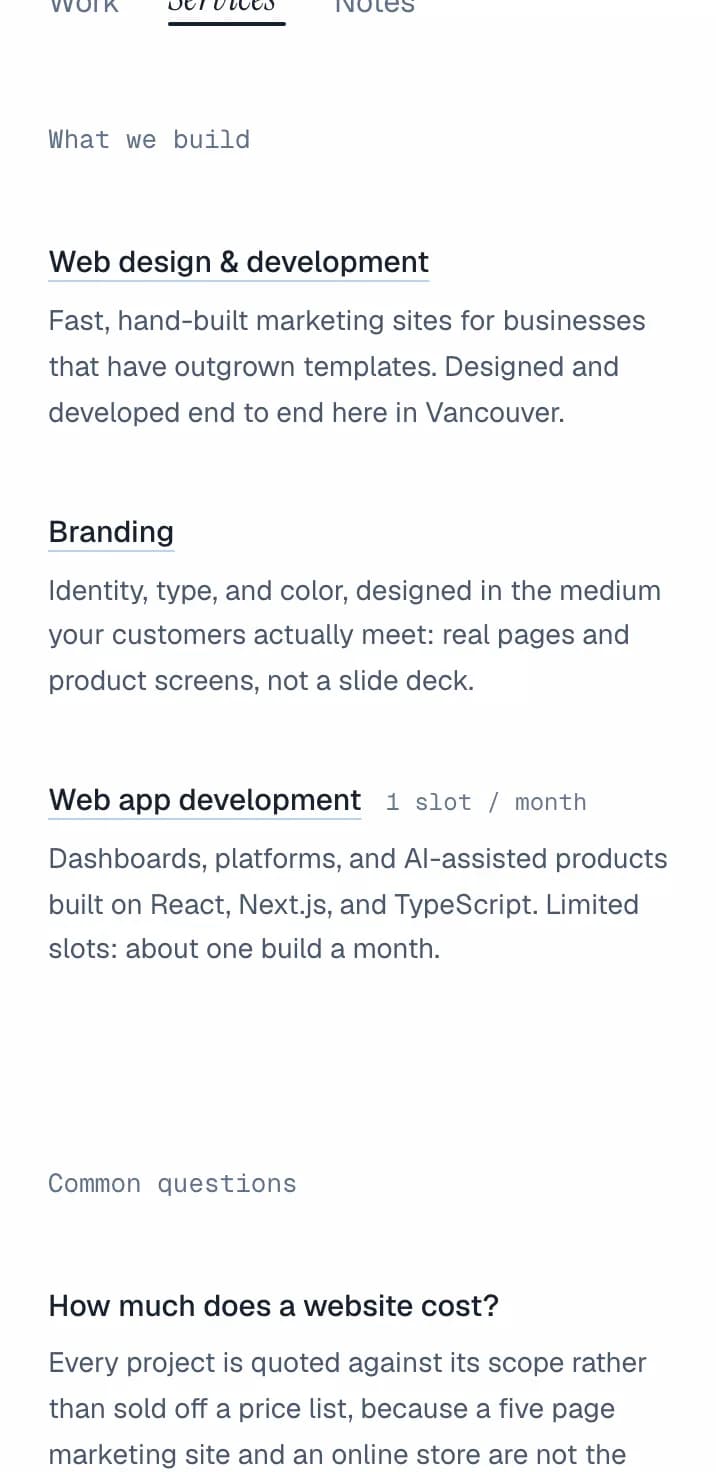
What we build
Three things, said plainly on one page. Web design and development: fast, hand-built marketing sites for businesses that have outgrown templates, designed and developed end to end here in Vancouver. Branding: identity, type, and colour, designed in the medium customers actually meet, which is real pages and product screens rather than a slide deck. Web app development: dashboards, platforms, and AI-assisted products on React, Next.js, and TypeScript, deliberately capped at about one build a month so the same senior team stays on every project.
Nothing is quoted off a price list, because a five page marketing site and an online store are not the same job. A short call settles the number and the timeline, and both are in writing before anything is invoiced.
The work
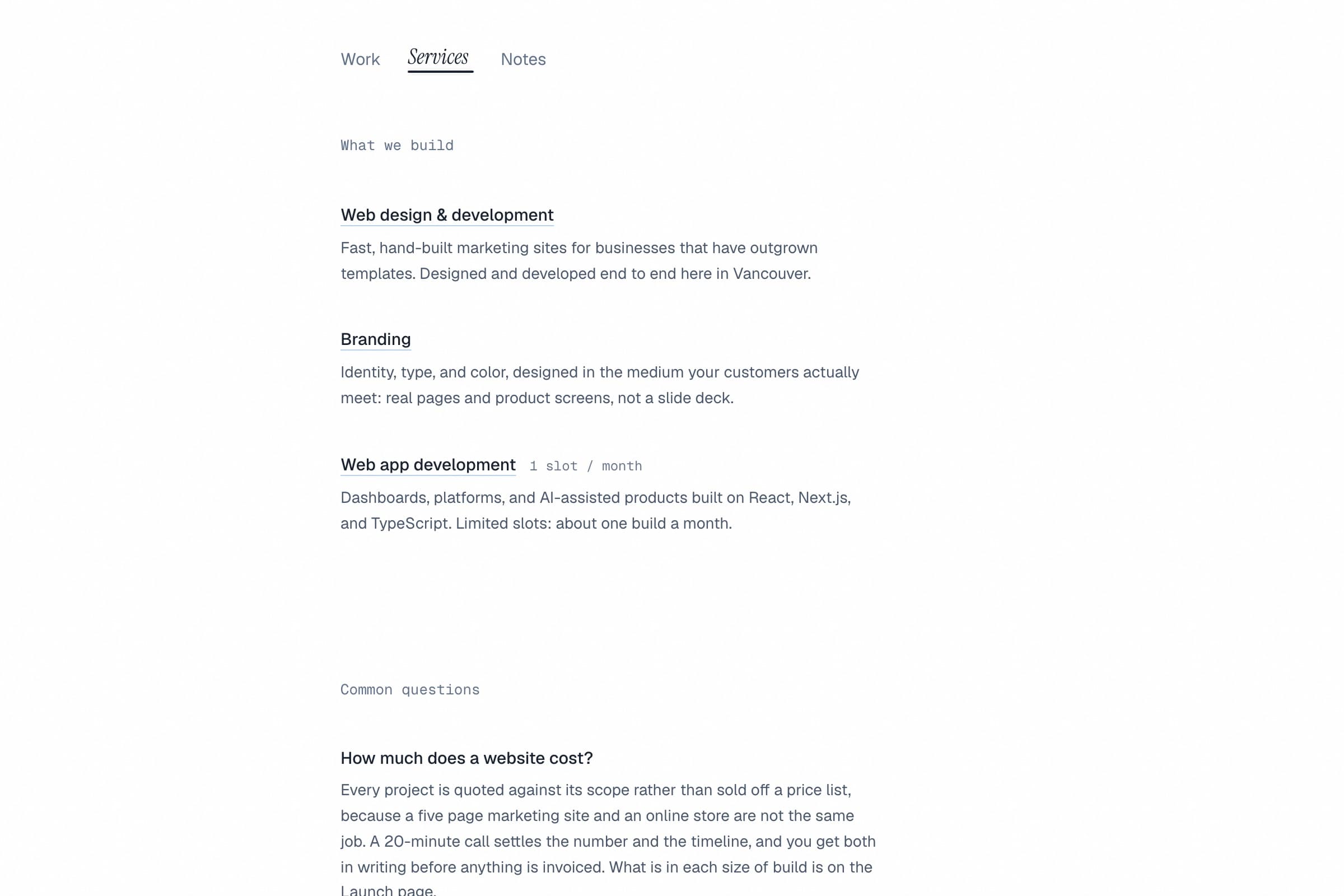
Client engagements and products we build for ourselves, all of them live:
- 604 Motor Cars, a Vancouver dealership storefront with an admin side that runs the lot: Next.js, React, and Firebase.
- Chef's Corner, online ordering for a food business, with checkout and order alerts wired into the kitchen: Next.js and React.
- Big Boys Motor Club, a dealership storefront with filterable inventory: React and Vite, deployed on Vercel.
- Mneme, a local-first memory engine for AI, and our own product rather than a client's.
- Nyxis AI, AI-assisted ticketing for cities and campuses, live with early partners.
- Blorp, business texting for local shops, on Next.js and Twilio.
Dealership sites, ordering platforms, AI products, and SMS infrastructure is a wider spread than most studios of this size carry, and it is deliberate: the same team seeing an inventory filter, a payment webhook, and a memory engine in the same quarter is what keeps the client work from turning into a house style. Most of the work cards play a muted scroll-through recording of the real site rather than a flat mockup, which is the only honest way to show work whose whole argument is motion and load time.
How an engagement runs
Engagement
Intro call
fifteen minutes, free, scope and price settled on the call
Design direction call
thirty minutes, references and feeling, direction back the next day
Design and build
about forty-eight hours, watching the real thing take shape
Walkthrough and handover
code, content, and analytics, in your accounts
First weeks of traffic
we stay close
The fifteen-minute intro call settles whether we are a fit, and if we are, scope, price, and timeline get confirmed on that call rather than in a proposal a week later. The design direction call is the one clients expect to dread: sites you like and dislike, colour, type, imagery, competitors, the feeling you want. You do not need design vocabulary for it. We ask the questions and translate the answers, then come back the next day with the proposed direction, so the argument about what it should look like happens before anything is built instead of during the review.
Build runs about forty-eight hours, and you watch the real thing take shape instead of reviewing wireframes for a fortnight. That pace is only possible because the direction is already agreed, which is the whole reason the second call exists. After a final walkthrough everything is handed over, code, content, and analytics, all in your accounts. You can fire us and keep working, which is a property worth having whether or not you ever use it.
Under the hood
The studio site is Next.js on the App Router with React, Tailwind, and Framer Motion, deployed on Vercel. Instrument Serif carries the few loud moments, the hero line and the case titles, and Geist does everything else. Local-business structured data ships with the page, because a good part of how a Vancouver studio gets found is still a search.